
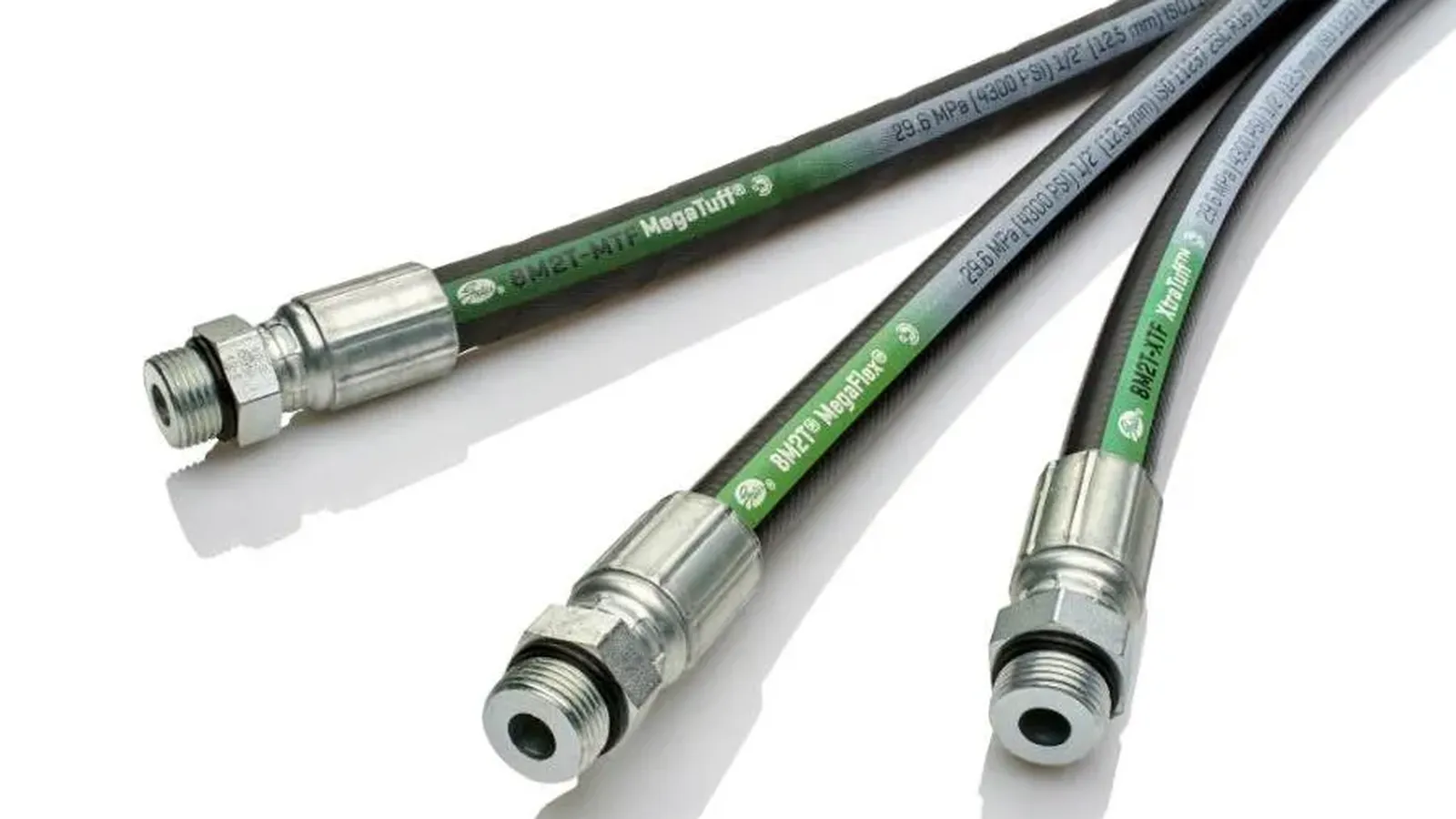
A hydraulic hose failure is not a maintenance event — it is a safety event. High-pressure fluid releases with enough force to injure, so the selection process exists to keep the hose within its rating under every condition the machine sees.
R1 vs R2 in Plain Terms
SAE 100R1 is one wire braid. Working pressures from roughly 25 bar (2“ bore) to 225 bar (1/4“ bore). SAE 100R2 is two wire braids — about 35% more pressure in the same size. Rule of thumb: R1 for return and medium lines, R2 for high-pressure circuits and where shock loads exist.
Match Pressure to the System
The hose rating must exceed the system’s maximum pressure — including spikes. A relief valve set at 150 bar does not protect a hose rated 130 bar, because the spike before the valve opens still counts. Size the hose to the spike, not the steady state.
Sizes and Bends
Bore size decides flow and pressure drop; the bend radius decides where the hose can physically route. Forcing a hose below its bend radius is the fastest way to kill it — the reinforcement work-hardens and the tube fatigues.
Assemblies: Make Them Factory Side
Field-assembled fittings are the weak link. Factory crimped assemblies on calibrated machines, pressure tested to 100%, remove the human error. If a machine shop in the field can crimp as well as the factory, great — otherwise buy tested assemblies.
Quick Selection Checklist
- System pressure, including spikes
- Flow rate → bore size
- Fluid and temperature range
- Routing → bend radius and length
- End fittings: JIC, BSP, NPT, flange
- Factory crimped and tested
See our hydraulic hose range for R1/R2 in the full size range.