
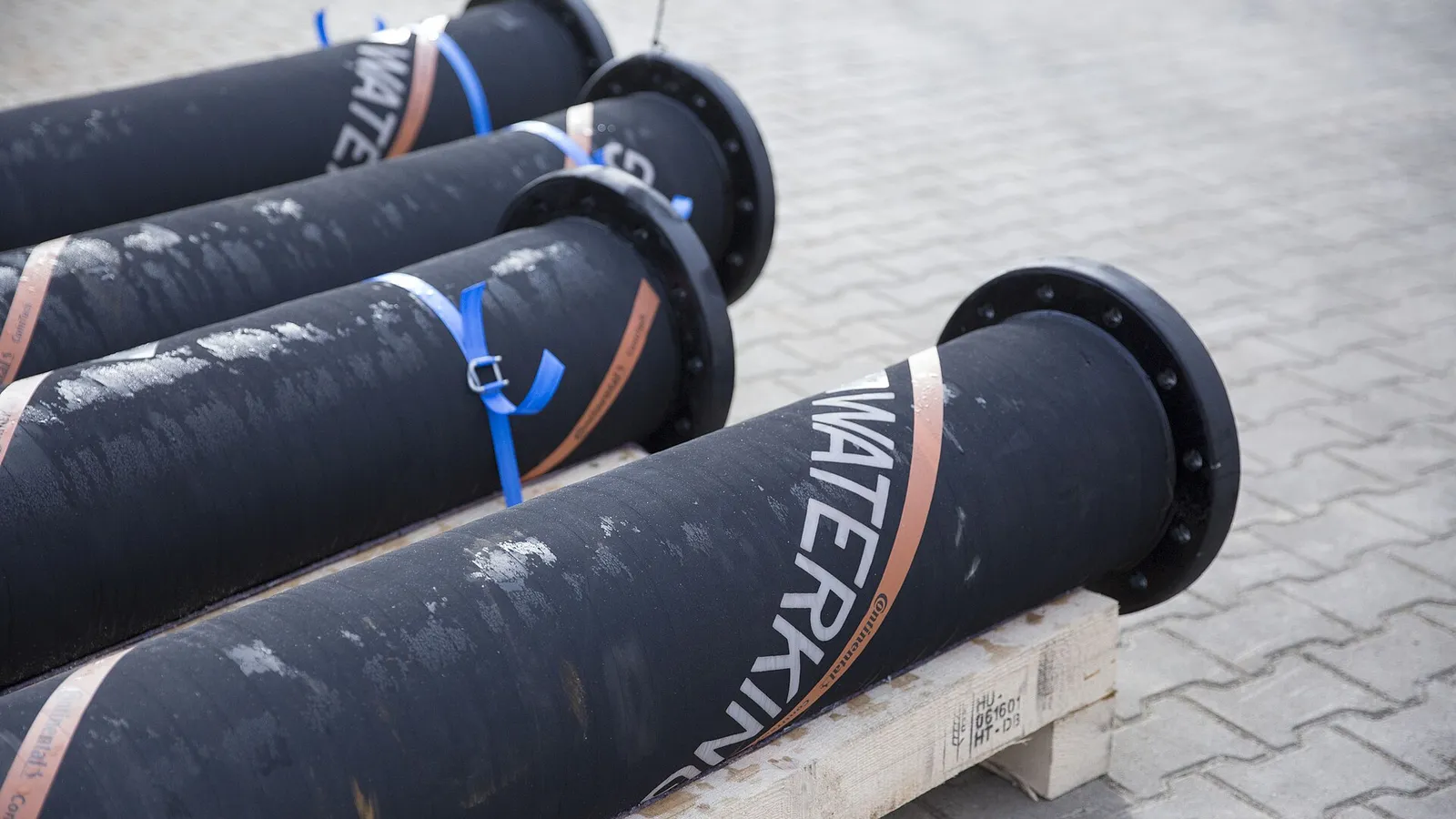
Suction hose must hold its bore open against vacuum while moving water, slurry or bulk solids; discharge hose must handle the pressure on the outlet side. The same hose often does both, and the construction — wall, helix wire, cover — decides how long it survives.
Constructions
- Layflat discharge hose: light, collapsible, low-cost — the workhorse for irrigation, dewatering and temporary water lines. Flat packs for storage.
- Wire-reinforced suction hose: PVC or rubber tube with an embedded helix wire that resists collapse under vacuum. For pump suction lines, tanker loading and general industrial use.
- Heavy-duty slurry and dredging hose: abrasion-resistant tube, multiple reinforcement plies, thick cover — for sand, gravel, sludge and dredge spoil.
Sizes and Fittings
From 25 mm to 300 mm bore, with camlock, flanged, threaded or plain ends. Working pressure from 4 bar (layflat) to 20 bar (reinforced), with full vacuum capability on suction constructions.
Applications
- Construction dewatering and site water supply
- Agriculture and irrigation
- Mining slurry transfer
- Dredging and marine discharge
- Tanker and bulk liquid transfer
FAQ
Can suction hose handle full vacuum? Yes — wire-reinforced suction constructions hold full vacuum with no collapse.
What is the largest size? Up to 300 mm (12“) bore in heavy-duty constructions.