
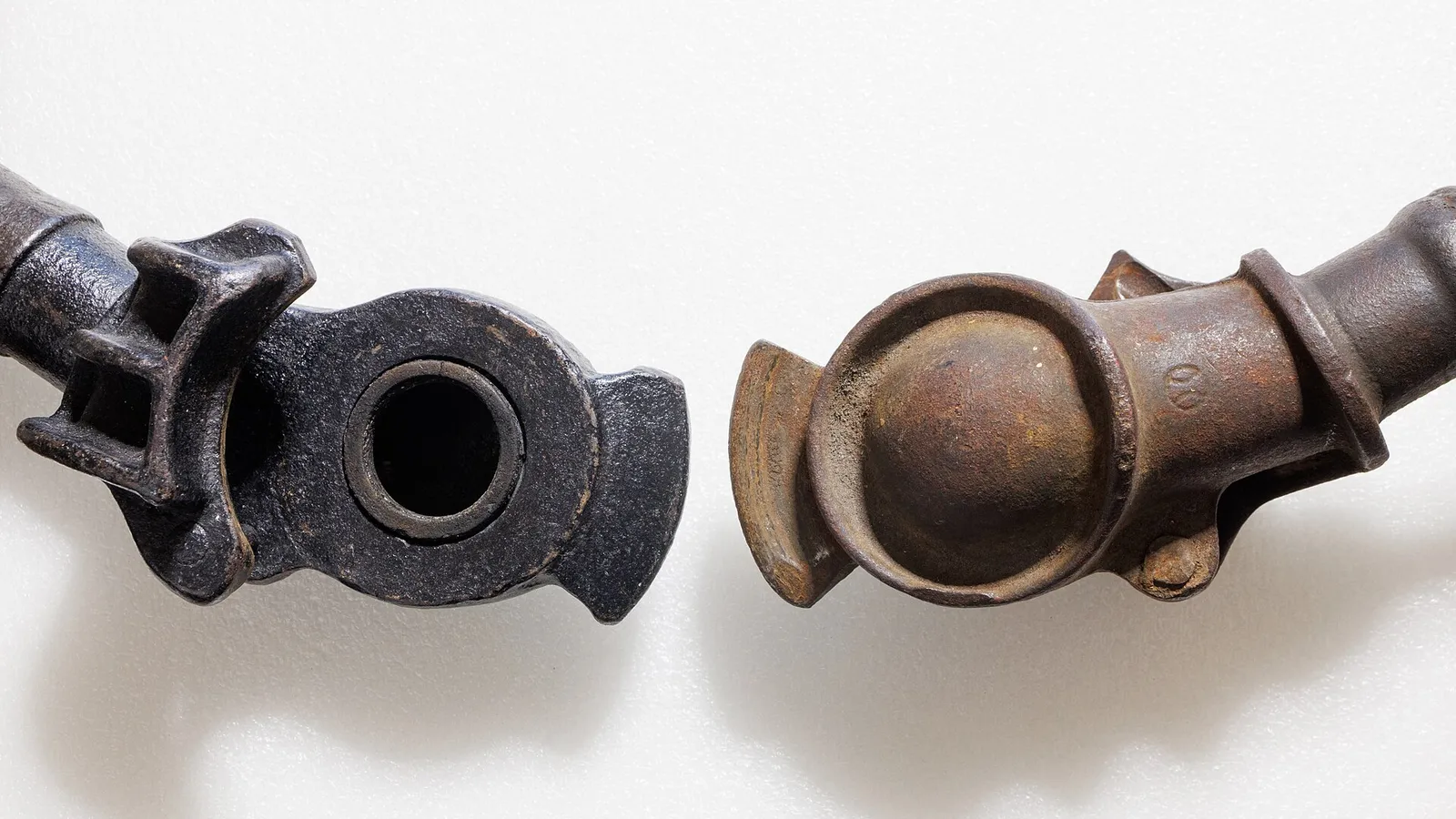
A hose is a component. A hose assembly is a deliverable: hose, end fittings, terminations and testing engineered as one unit, ready to bolt onto a machine or process line. Most hose failures happen at the assembly level — not because the hose failed, but because the assembly was specified, terminated or tested wrong.
This guide covers what makes an assembly reliable: the fitting families, the termination methods, the tests that prove it, and the workflow for specifying custom assemblies that actually work.
Why the Assembly Is the Real Product
Buying loose hose and fitting it in-house works for simple low-pressure duty. For anything pressure-rated, food-contact, chemical or safety-critical, the assembly is the engineering unit:
- The fitting is the stress concentration — pressure, vibration and flex all concentrate at the termination; that is where assemblies fail
- The termination determines compatibility — a PTFE-lined hose needs different ferrules than a rubber hose; the wrong termination wicks product into the reinforcement
- The test proves the unit — a pressure test on the complete assembly validates hose + fitting + crimp together, not each part separately
- Traceability needs the assembly — batch numbers, crimp records and test certificates attach to the finished assembly, not the raw hose
Fitting Families: Matching the Connection to the System
| Fitting family | Connection type | Typical use | Notes |
|---|---|---|---|
| Camlock (cam & groove) | Quick disconnect | Chemical, food, agriculture, tanker transfer | Fast, tool-free, low-pressure; sealing depends on gasket |
| Flange (ANSI/BS/DIN) | Bolted | Large-bore transfer, high duty, permanent lines | The most robust connection; heavy |
| Threaded (NPT / BSP / JIC / DIN) | Screwed | Hydraulic, compressed air, instruments | Match thread standard to system — mixing standards leaks |
| Sanitary (Tri-Clamp) | Clamp, flush bore | Food, dairy, pharma | Smooth bore hygiene, CIP-compatible |
| Quick couplings (camlock, dry-break) | Tool-free | Frequent connect/disconnect | Dry-break prevents spillage for hazardous media |
The dominant specification error: mixing thread standards. NPT is taper-sealed (threads do the sealing); BSP comes in taper (BSPT) and parallel (BSPP) with a sealing washer; JIC is a 37° flare. They look similar at a glance and are not interchangeable. When replacing an assembly, match the existing fitting exactly — take a sample to the supplier.
Termination Methods: Crimp, Clamp-On, Reusable
The termination transfers the fitting’s load to the hose. Three methods dominate:
Crimped (pressed) fittings — the standard for pressure duty
The fitting is compressed onto the hose with a calibrated die, creating a permanent mechanical bond.
- Best for: hydraulic, high-pressure, chemical, anything rated
- Requires: a calibrated crimper, the correct die for hose + fitting, and operator skill
- Quality control: crimp diameter verification, pull-off testing on sample assemblies
- The point of failure: wrong die, wrong hose/fitting match, or over-crimping that cuts the tube
Clamp-on / band clamp fittings
The fitting is clamped over the hose with one or two band clamps.
- Best for: low-pressure suction/discharge, food transfer, vacuum duty (wire-clamp), quick field repairs
- Quality control: clamp torque, smooth clamping surface (sharp edges cut the cover)
- The point of failure: under-torque (leaks) or over-torque (cuts the hose)
Reusable (screw-together) fittings
The fitting threads onto the hose, compressed by hand or spanner; can be disassembled and reused.
- Best for: field repair, low-duty, temporary lines
- The point of failure: less consistent than crimped; depends on assembly care
The rule: pressure-rated duty → crimped, with documented crimp records. Low-pressure/vacuum → clamp-on. Field service → reusable.
Testing: What Proves an Assembly
A certified assembly carries test evidence. The standard battery:
| Test | What it proves | When |
|---|---|---|
| Proof pressure test | The assembly holds a defined test pressure (typically 1.5× working pressure) without leakage or deformation | Every pressure-rated assembly |
| Burst test | The ultimate strength (typically ≥4× working pressure) | Sample/type testing |
| Leak test | No leakage at working pressure | Every assembly (water or air per media) |
| Pull-off test | The fitting does not separate under axial load | Sample testing per batch |
| Vacuum test | Suction assemblies hold rated vacuum | Suction duty |
| Electrical continuity | Anti-static assemblies stay bonded | Flammable media duty |
Ask for the test documentation with the order — a supplier who cannot produce proof-pressure records for a pressure-rated assembly is a red flag.
The Custom Assembly Workflow
Specifying a custom assembly is a five-step conversation, not a catalogue order:
Step 1 — Define the media and duty. Product, temperature, pressure, vacuum, environment, certificates required (FDA, ATEX, etc.).
Step 2 — Select the hose. From the media and duty — the guides on this site cover food, PTFE, chemical, hydraulic, silicone, suction and stainless-braided selection.
Step 3 — Define the connections. Both ends, with thread standards and sizes matched to the system. Include any gasket/seat requirements (e.g. camlock gasket material by media).
Step 4 — Define the assembly. Length with bend allowance, straight vs angled fittings (45°/90°), any protective sleeving or marking requirements.
Step 5 — Test and document. Specify the test battery, the documentation pack (material certs, test records, batch traceability), and the marking standard (e.g. assembly tag with spec and date).
Common Assembly Failures and Their Causes
| Failure | Cause |
|---|---|
| Leak at the fitting | Wrong thread standard, damaged seat, under-torque, wrong gasket |
| Fitting blow-off | Wrong crimp die, hose/fitting mismatch, over-pressure |
| Hose fails at the fitting | No straight lead-in before the fitting, over-tight bend at the termination |
| Wicking/corrosion at the end | Liner not properly terminated for chemical duty |
| Fitting corrosion | Wrong fitting material for the media (e.g. brass in acid duty) |
| Vibration fatigue | No strain relief; assembly not supported/clamped |
Assembly Length: Measure Twice, Order Once
Length error is the most common — and most expensive — assembly mistake, because it is found only at installation:
- Measure the routing path, not the straight-line distance — follow the actual route around obstructions, using a flexible tape along the intended path
- Add bend allowance — every bend consumes length at the hose’s bend radius; a U-turn needs roughly 1.5–2× the bend radius in extra length
- Add slack for movement — if the assembly connects moving components, add length for the full travel range plus 10% margin
- Account for angled fittings — a 90° fitting at one end changes the effective length; specify which end is straight and which is angled
- When in doubt, round up — an assembly that is 5% too long drapes; one that is 5% too short is scrap. Specify length to the outside of the fittings, and agree with the supplier whether the quoted length is “overall” or “between fitting ends”
A drawing or photo of the routing with dimensions beats a verbal length every time — send both.
Receiving and Field Acceptance
The assembly is delivered; the testing happened at the factory. Confirm it on arrival:
- Visual inspection — cover damage, kinked braid, damaged threads, gasket condition
- Fitting verification — thread standards match the order (JIC vs BSP is the classic swap), swivel action smooth
- Marking check — assembly tag or marking line present, spec matches the order
- Documentation check — proof-pressure record, material certificates, batch traceability in the pack
- Installation test — after fitting, run the system to working pressure and check for leaks at every termination before full load
Reject on arrival if: the fitting standard is wrong, the length is short, the test documentation is missing for a pressure-rated assembly, or the crimp looks loose (fitting rotates on the hose).
Working With a Factory-Direct Assembly Supplier
The factory-direct model changes the procurement conversation — here is how to make it work:
- Send the media data, not just the size — media, concentration, temperature and pressure let the supplier engineer the assembly rather than quote a catalogue line
- Ask for the documentation pack up front — material certs, test records and traceability should be part of the quote, not an extra
- Order samples before volume — a sample assembly with the test record installed and trialled is worth more than a hundred datasheets
- Agree the MOQ and lead time honestly — factory-direct pricing assumes batch efficiency; a realistic forecast beats an emergency order
- Establish the quality baseline — agree the test battery once, then every batch ships against the same standard
Specification Checklist
- Media, concentration, temperature confirmed
- Pressure (working + spikes) and vacuum defined
- Hose construction and liner selected for the media
- Fitting standard and size matched to the system (sample verified)
- Termination method appropriate for the pressure class (crimped for pressure duty)
- Gasket/seal material compatible with the media
- Length with bend allowance, angle fittings specified
- Test battery and documentation pack agreed
- Traceability and marking agreed
The Takeaway
The assembly is where hose engineering succeeds or fails. Specify the hose for the media, the fitting for the system, the termination for the pressure class — and make testing and documentation part of the order, not an afterthought. A documented, tested assembly is a component you can forget about; an untested one is a maintenance call waiting to happen.
If you need hose assemblies for a specific application — send the media, temperature, pressure, both end connections and the certificates required — PureFlow will engineer, assemble, test and document the complete assembly, factory-direct.
- Hose Assemblies — custom assembly service
- Hose Assembly Guide — field reference
- Chemical Transfer Hose Complete Guide — termination and wicking in depth
- Hydraulic Hose Complete Guide — crimping and fitting series